RECENT WORKturning AI hype into action: building a roadmap that actually works
How can we use all the buzz around AI and turn it into a clear, responsible plan that users trust, the business can execute, and the team can scale?
Note: All workshop materials, designs, and product identifiers have been redacted or abstracted in accordance with company confidentiality agreements.

the goal, my role and the result
I led a cross-functional team of 3 designers and 1 researcher and collaborated with engineers and data scientists, over 6 months (and ongoing). My role was to define the AI strategy, design the roadmap, and create how AI would appear and behave in our products.
We delivered:
experience-led AI roadmap
early prototypes that could be rolled out quickly
adoption and trust top of mind as central elements
the challenge
The business wanted to “do something with AI” to remain relevant with both internal stakeholders and end consumers. However, there was no clear strategy of how to integrate AI, where the business and users might benefit the most.
On top of that, users themselves were split: some were eager to adopt, others skeptical. Combined with regulatory constraints, the lack of direction was causing decision paralysis.
process and approach
I started by aligning stakeholders on why AI would matter. I ran workshops with POs, engineers, data scientists, and designers to define success criteria that balanced user value, business impact, and responsibility.
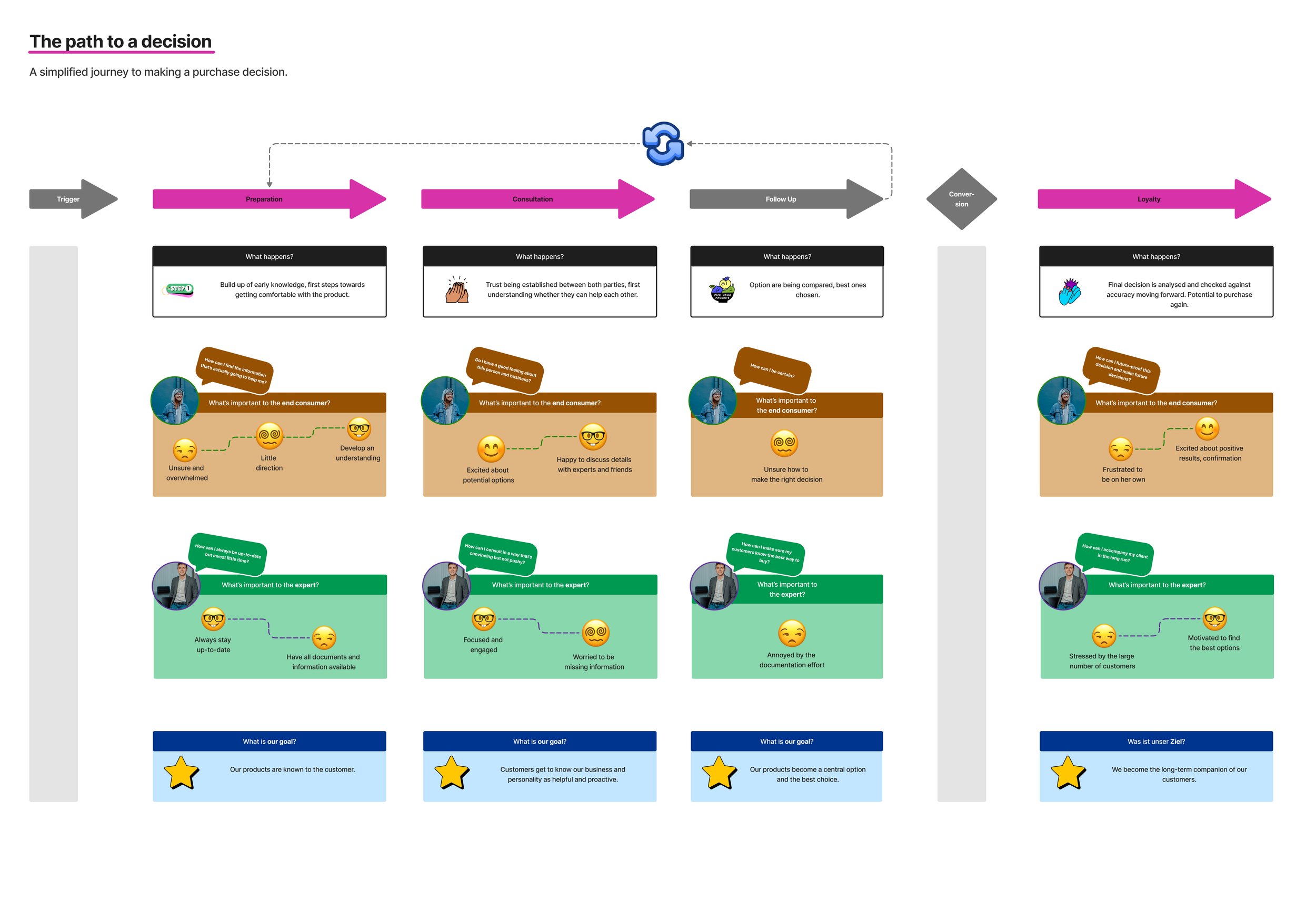
Material used during the workshop.
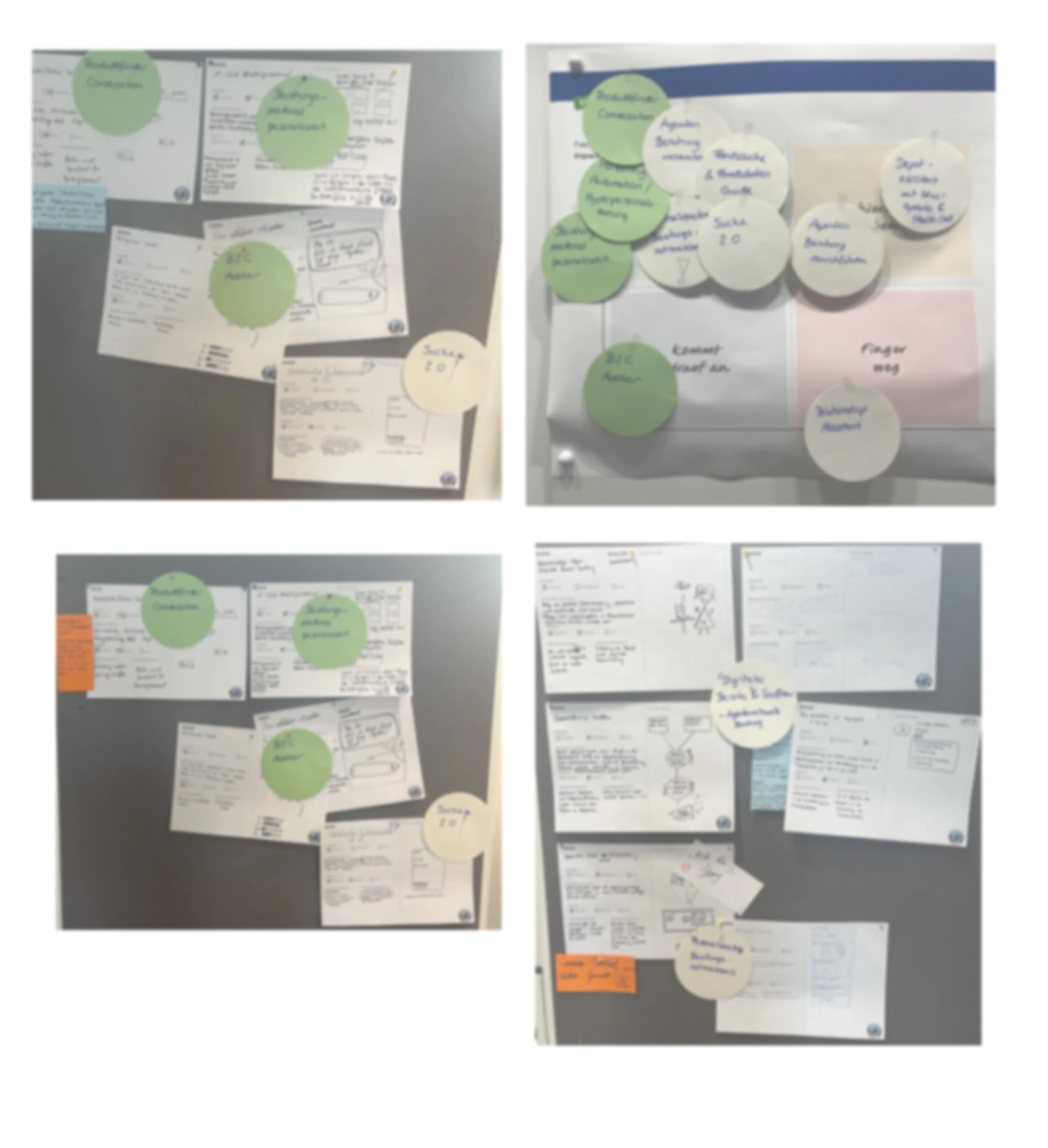
And the result coming out of it.
Next, I led user research with 20+ participants, which revealed two main personas: AI-curious adopters and cautious traditionalists. Both came with their own challenges for the product. While one group wanted to see AI-powered tools in use as quickly as possible, challenging our speed, the other group needed to be introduced and educated very slowly on the role and power of AI tools.
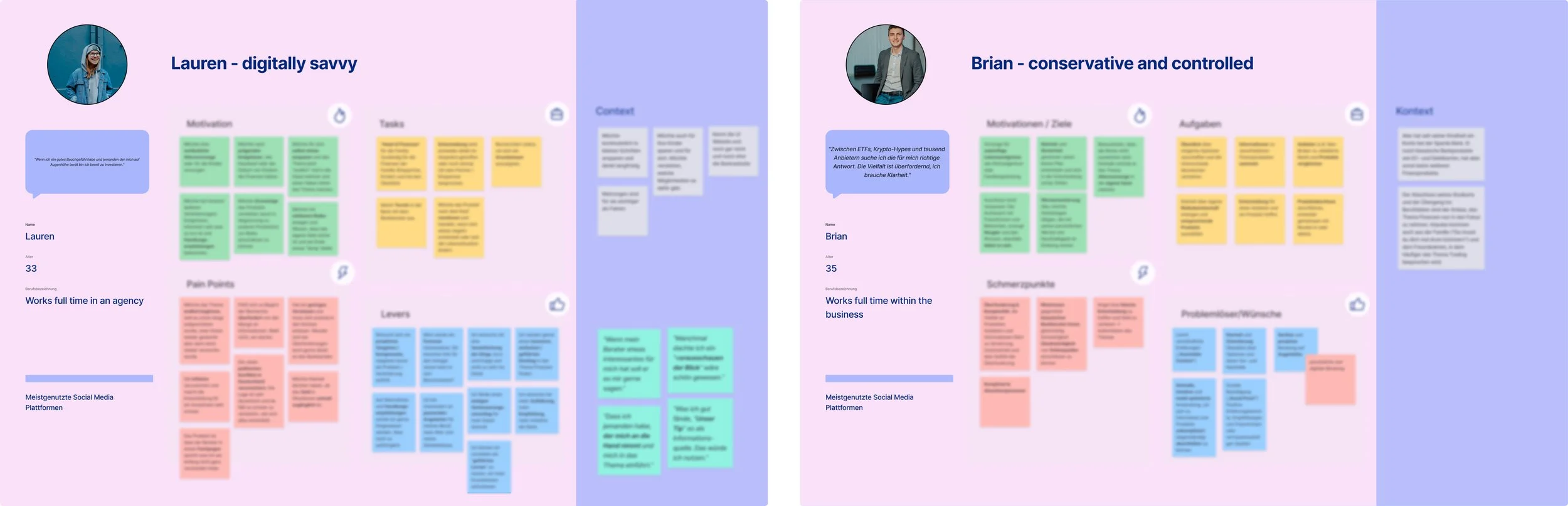
Opposing personas challenge the set up of one product using an emerging technology.
Using these insights, we mapped and prioritised AI opportunities by potential value, risk, and feasibility. I designed and tested early prototypes to validate trust, clarity, and usefulness. Finally, I created a phased rollout framework: start with assistive insights, evolve to semi-automated workflows, and scale as literacy and trust grow.
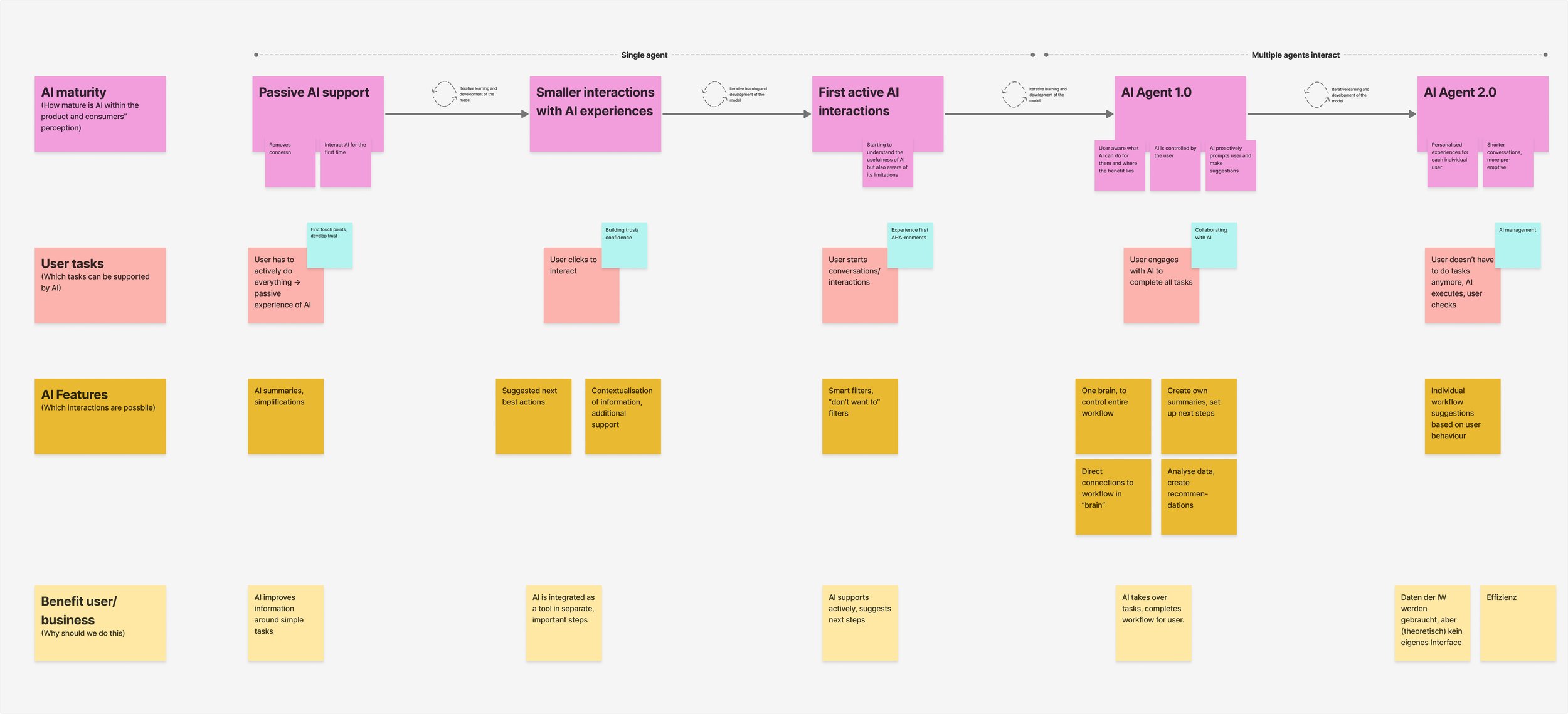
AI experience roadmap to establish trust with skeptical users while allowing early adopters to enjoy new experiences.
outcome and impact
Here’s an overview of what we’ve achieved in this project:
the roadmap gave the business clear direction and transformed AI from hype to actionable strategy
Early prototypes delivered value fast
adoption pathways for both user groups were defined, and the framework now guides all new AI initiatives
Internal stakeholders shifted from asking “where can we use AI?” to “where should we?”

key takeaways
Breaking the work into small, manageable steps let us move fast without losing focus, kept momentum high, and ensured AI was introduced responsibly and strategically.